

From Insight to Impact: How AIM XR Behavioral Signals Elevate the True Voice of HCPs
By: Delaine Brilz, Assoc. Director, Product Management, IQVIA Digital
Andrew Burkus, Sr. Director of Thought Leadership, IQVIA Digital
Key takeaways
By integrating endemic behavioral data with clinical signals, brands can identify high‑value HCPs, anticipate emerging needs, accelerate adoption of new evidence, and deliver hyper‑relevant, personalized communications that build trust and support better patient outcomes:
•Behavioral Signals from AIM XR Reveal True Clinical Needs- Real‑time research on endemic medical sites provides a clear window into the information needs, channel preferences, and communication styles of healthcare professional (HCP) audiences, enabling brands to tailor content that directly addresses an HCP’s real moment of clinical need.
•Real‑Time Behavior Transforms Personalization- When behavioral signals guide promotional efforts, brands can deliver intent‑aligned content at the exact moment clinicians are seeking it helping to turn engagement from guesswork into precision support.
•External Events Shape Clinical Curiosity- Research patterns shift rapidly in response to cultural moments, scientific breakthroughs, and seasonal trends. These spikes often highlight where clinical attention is heading long before claims data reflects downstream behavior.
Introduction: How Listening Between the Lines turn Behavior into Action and Impact
When clinicians turn to endemic medical sites- peer-reviewed journals, CME platforms, and clinical briefs- they are signaling precisely what they need, when they need it. By observing these research behaviors, brands can uncover deep behavioral insights: not only immediate content needs, but also preferred channels, learning styles, and even nuances in language and tone. These “voice of the customer” insights empower forward thinking organizations to elevate their communications, delivering timely and relevant content that directly addresses clinicians’ real-world challenges.
-1.png?width=400&height=94&name=Blog_CallOutBoxes-01%20(1)-1.png)
Positioning these signals from the behavioral data as the foundation for both personal and non-personal promotion transforms marketing from guesswork to guidance. If an HCP is researching your brand or a specific therapeutic area, you can respond in the moment with content tailored to their intent, format, and depth, all delivered through their channel of choice.

In a world saturated with data, discernment is the differentiator. Listening to the right signals and acting swiftly turns personalization from aspiration into reality. By translating real-time research behavior into precise, relevant outreach, brands meet clinicians where they are, close information gaps before decisions are made, and elevate engagement from generic interactions to meaningful, human connections that advance patient care.
What Are HCPs Researching Right Now?
Every day, clinicians generate an extraordinary volume of digital research activity- AIM XR alone captures hundreds of millions of research events each month. This wealth of behavioral data, collected at the individual HCP level, offers a dual vantage point: it reveals the immediate informational needs driving clinical decision -making today, while also illuminating how providers are preparing for the evolving needs of their future patient populations.
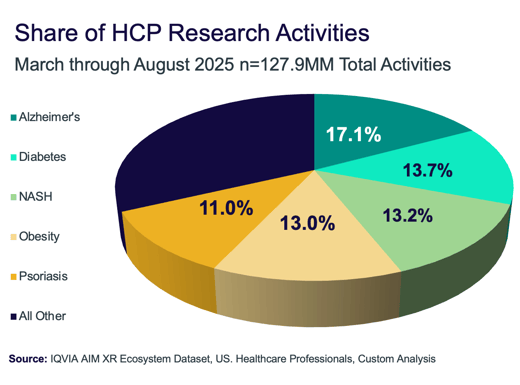
A compelling example emerges when examining research patterns across high- prevalence disease states. Among them, Alzheimer’s disease stands out decisively. It not only dominates current HCP research activity but also reflects one of the most critical demographics shifts underway in the United States. By 2030, one in five Americans will be over the age of 65 , a milestone driven by the aging of the baby-boomer generation. This demographic inflection point carries profound implications for public health, amplifying both the burden of age associated diseases and the urgency for timely therapeutic innovation.
The intersection of increasing disease burden and intensified HCP search behavior signals a pivotal opportunity for brands seeking to engage clinicians who are either actively caring for- or preparing to care for- these patient populations. Clinicians have an on-going appetite for the next wave of actionable information: diagnostic advancements, updates on emerging treatments, strategies for early detection, and the real-world evidence that can elevate the standard of care.
The velocity and volume of their research activity suggest that once new clinical evidence or therapeutic options become available, the front line is primed to adopt them rapidly. In short, the data reveals an unmistakable narrative: Alzheimer’s disease, as well as the many other conditions expected to increase with an aging population, represents not just a clinical frontier but a profound societal one. The intensity of HCP engagement underscores both the urgency of the challenge and the readiness of providers to integrate meaningful innovations that can shape better outcomes for millions.
Real-World Evidence: How Events (and even Pop Culture) Can Shape HCP Behavior
Healthcare provider research behavior is far more dynamic- and culturally responsive- than many realize. Research spikes are not driven solely by clinical developments. External forces such as seasonal disease patterns and even high visibility cultural moments can rapidly accelerate clinical curiosity.
For example, when Justin Timberlake publicly disclosed his Lyme disease diagnosis in July 2025, the resulting surge in media coverage amplified both public and professional awareness of tickborne illnesses and triggered a measurable rise in clinical information seeking. What’s less widely recognized is that these spikes don’t occur only on consumer news or lifestyle platforms, endemic medical sites show the same accelerated research behavior, as illustrated in the graph below:
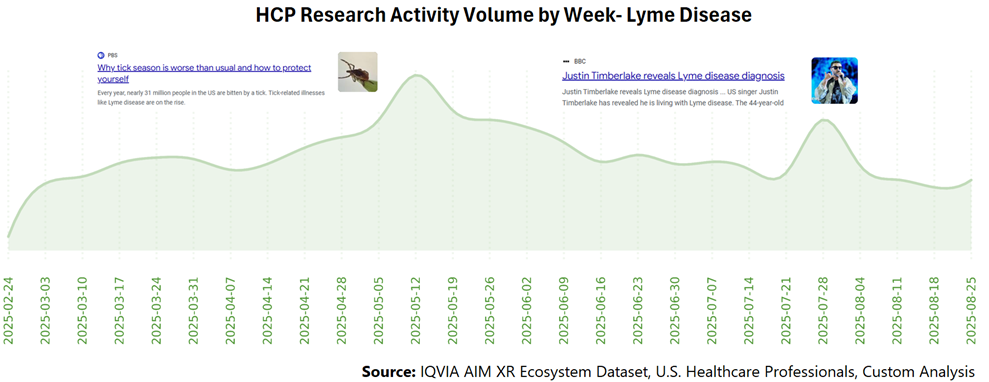
These real-time shifts in the volume of research activity demonstrate how quickly HCPs turn to educational resources in response to emerging conversations, often long before claims data begins to capture downstream patient behavior. This is why we regularly say, “the answers are in AIM before the claim”- because behavioral data shows where clinical attention is going before the system formally records it.
Similarly, AIM XR consistently reveals similar patterns surrounding major scientific advancements and industry events. Research into multiple myeloma, for instance, reliably surges during the annual ASCO meeting as clinicians seek to digest the latest clinical trial findings and updates to therapeutic standards.
This mirrors real-world oncology reporting from ASCO 2025, where substantial advancements- including new therapeutic combinations and refinements in disease risk stratification- generated considerable professional engagement. These peaks are not random outliers; they are structurally predictable behavioral signatures, repeating year after year across therapeutic areas:

With the ability to examine historical trends and real-time data simultaneously, brands can reliably anticipate when HCP interest rises, whether due to new science, seasonal epidemiology, cultural moments, or regulatory milestones. For marketers, the implications of these insights are profound. When brands understand what clinicians are researching and why, they can respond with communications that feel timely, relevant, and genuinely supportive. Behavioral intelligence allows brands to engage clinicians precisely when their curiosity is highest, offering evidence-based resources that meet immediate informational needs.
Instead of broad, static messaging, brands can deliver tailored communications that align directly with unfolding events, whether that’s a major congress like ASCO or an unexpected cultural moment that pushes a disease state into the national spotlight. By aligning educational content with these behavioral inflection points, brands position themselves not as promoters, but as trusted partners who help clinicians stay ahead of evolving clinical landscapes depending on the therapeutic area.
How Brands Can Use Behavioral Insights to Drive High Impact, Personalized Engagement
Most of the data marketers rely on reflects actions that have already occurred- an email open, a social impression, a prescription written. While useful, these retrospective signals lack the immediacy of behavioral intelligence, which reveals what matters to clinicians in the moment. This real time visibility creates unprecedented opportunities to increase relevance and receptivity through timely, context aware outreach.
Naturally, the question becomes: What can a brand accomplish with all this behavioral data?
It’s simple to say successful brands build smarter, more personalized omnichannel engagement strategies, but meaningful personalization is far more complex in practice. The payoff remains undeniable when executed effectively, personalization consistently drives measurable impact on engagement and even ROI. Endemic behavioral data is transforming how we understand and engage clinicians. With AIM XR, brands can stop guessing and start connecting-delivering content that is timely, relevant, and genuinely personal.
Behavioral intelligence enables brands to understand not just who clinicians are, but what they care about right now. By integrating endemic behavioral data with clinical signals, marketers can shift from reactive to proactive, precision timed engagement:
- Build Custom Audiences Around Real HCP Research Behavior
Identify clinicians actively researching topics relevant to your therapeutic area and form dynamic audiences based on genuine, organic interest. - Map Behavioral Triggers Across Channels to Engage at Peak Relevance
Monitor daily research patterns so outreach lands exactly when clinician curiosity is highest-when they are most likely to engage and act. - Tie Behavioral Signals to Clinical Indicators for Predictive Insight
The intersection of behavioral and clinical data uncovers patterns that reliably predict behavior change, enabling brands to anticipate receptivity, prioritize the right audiences, and invest with greater confidence and precision. - Identify High‑Value HCPs Beyond Your Existing Target List
Surface previously untargeted clinicians showing strong interest in your therapeutic area and seamlessly integrate them into outreach efforts. - Deliver Information at the Moment of Need
Real‑time behavioral gaps signal when clinicians are seeking answers. Providing clinical updates, evidence summaries, or educational tools at these moments maximizes impact. - Personalize Communications Based on True Clinical Interests
Tailor messaging to each clinician’s demonstrated research behavior, ensuring communication is bespoke, concise, and aligned with their immediate needs. - Anticipate Future Educational Needs Before Milestones Hit
Identify rising research trends- whether in Alzheimer’s, oncology, infectious disease, or seasonal conditions- and prepare content ahead of major readouts, approvals, or congresses. - Accelerate the Adoption of New Evidence and Innovations
When clinician behavior signals readiness for change, deliver resources that help translate emerging science into practice more quickly. - Strengthen Credibility Through Data-Driven Relevance
Aligning outreach with observed clinician behavior-not assumptions- builds authenticity, trust, and lasting relevance.
The New Standard for HCP Engagement
Behavioral intelligence is redefining the rules of engagement. By shifting from retrospective metrics to real-time behavioral insight, brands can meet clinicians at the exact intersection of curiosity and need. In an environment where attention is scarce and clinical demands are high, relevance becomes your competitive advantage. AIM XR enables brands to see around the corner-identifying emerging interests, engaging at pivotal moments, and delivering precision-focused experiences that feel organic, intuitive and valuable.
The brands that win will be those that stop broadcasting and start listening- those that use behavioral data not just to personalize, but to truly empower HCPs when it matters most.
[1] U.S.Census Bureau. Demographic Turning Points for the United States:Population Projections for 2020 to 2060. Revised Feb. 2020,https://www.census.gov/content/dam/Census/library/publications/2020/demo/p25-1144.pdf.
[1] JustinTimberlake Announces He Has Been Diagnosed with Lyme Disease.” PBSNewsHour, 31 July 2025,https://www.pbs.org/newshour/arts/justin-timberlake-announces-he-has-been-diagnosed-with-lyme-disease
[1] ASCO2025: New Standard of Care Emerges for Multiple Myeloma.” Ecancer News,30 May 2025,https://ecancer.org/en/news/26524-asco-2025-new-standard-of-care-emerges-for-multiple-myeloma
.png?width=640&height=360&name=oct%201%20FACT%20SHEET%20TEMPLATE%20(1).png)