
From Devices to Decisions: Interpreting Healthcare Signals at CES
This year’s Consumer Electronics Show, held in Las Vegas, presented a unique duality: consumer technology innovation on full display, alongside the parallel evolution of AdTech and modern marketing. While these worlds may appear adjacent at first glance, in healthcare their convergence feels increasingly organic.
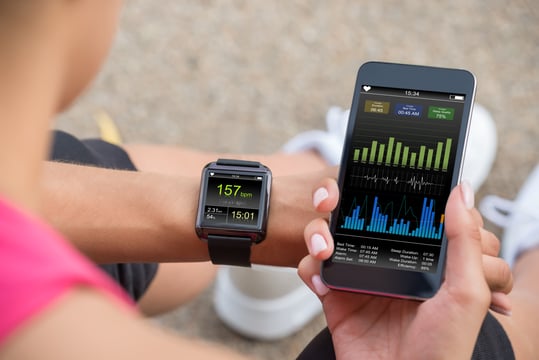
Across the showroom floor, wearable technologies were omnipresent. They ranged from smart glasses/adaptive eyewear to biometric rings, other biosensors, and even vagus nerve stimulators. While these innovations are often positioned as tools to enhance human performance, their wider importance lies in the data they generate. When responsibly collected and thoughtfully applied, this data holds meaningful potential for early detection and prevention of health conditions, as well as longitudinal health insights.
Healthcare brands are recognizing this as an opportunity not just to collect signals, but to analyze and convert them into more responsive, personalized, and ultimately human-centered experiences. This focus on optimizing the human experience naturally extends to the rise of agentic applications in healthcare marketing. Increasingly, brands and agencies are deploying agents to support everything from workflow orchestration to outcome optimization.
What CES underscored was not novelty, but a clear inflection point: irrevocable shifts in scale and complexity, along with systems that can reason, adapt, and act with speed and precision. Historically, healthcare as an industry has been cautious about adopting emerging technologies, yet it was notable to see agencies and brands leaning in. The stakes are high. Delivering relevant messages to patients and healthcare professionals at the moments that matter is no longer aspirational, it is foundational.
Adding to this momentum, CES coincided with the emergence of healthcare-focused capabilities across two category-defining conversational AI platforms: OpenAI’s ChatGPT Health and Anthropic’s Claude for Healthcare. Both were rolled out during and right after CES. In light of evolving consumer search behaviors, these developments represent a remarkable evolution. As conversational interfaces and generative systems increasingly define how patients discover and interpret information, the implications extend beyond engagement alone. The opportunity lies in guiding individuals closer to credible information, evidence-based decision-making, and ultimately better health outcomes.