Skip to content

Healthcare Game Changers: PA & NP Trends You Need to Know

A Joint Analysis from AAPA and POCN Group, an IQVIA Business 

Nurse Practitioners (NPs) and Physician Associates (PAs) are now central to how care is delivered, how treatment decisions are made, and how patients access therapy. Yet most pharma and agency strategies are built around datasets that can't fully see them — creating a structural gap between where clinical influence lives and where investment actually goes.

When NP and PA impact is misattributed or undercounted, ROI calculations are wrong, prescriber reach is understated, and brands lose ground to teams that are paying attention to the full picture.

Download the Report

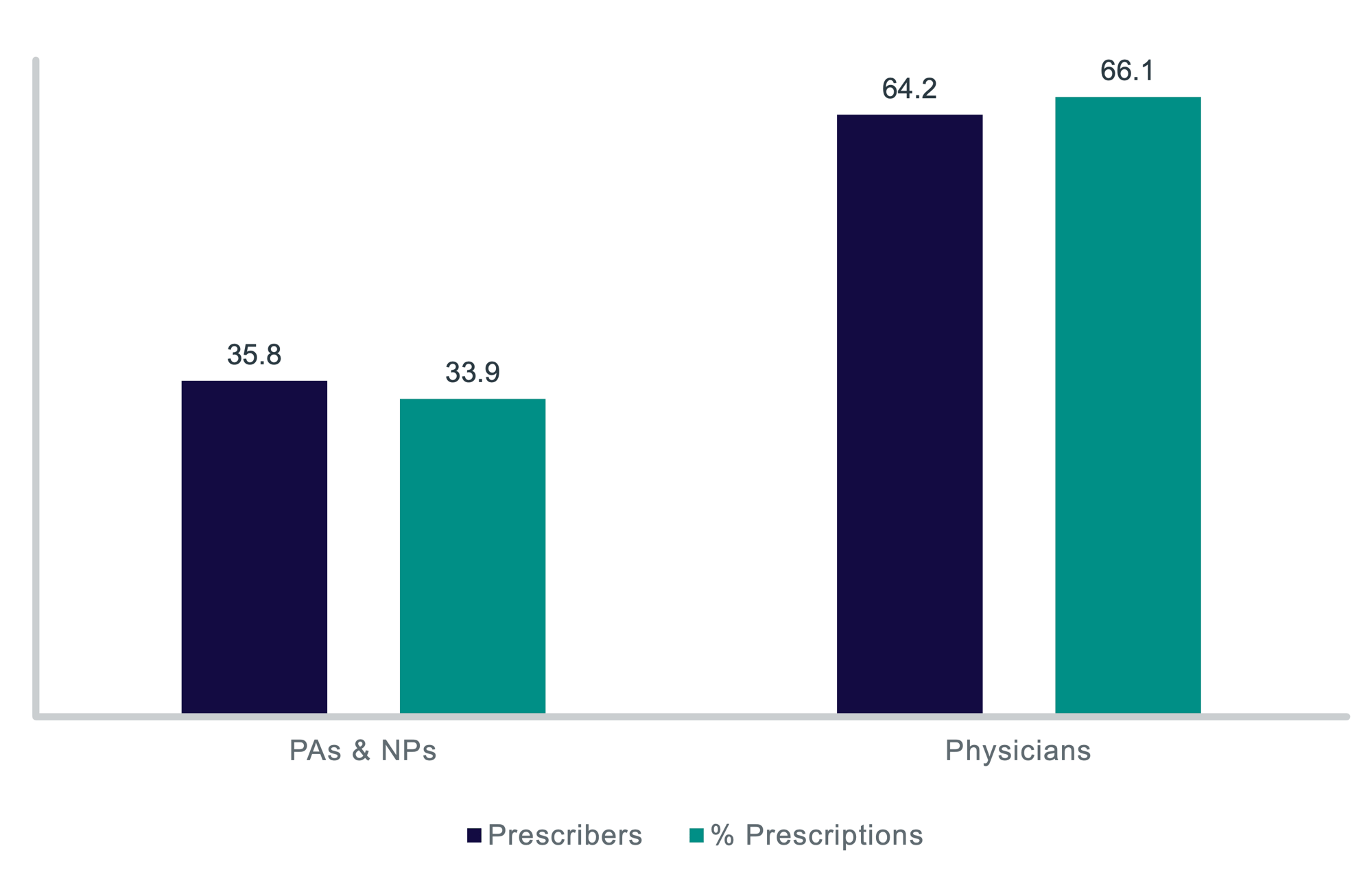
NPs and PAs collectively account for nearly 40% of U.S. healthcare providers — and 35.8% of all active prescribers nationwide.

This landmark report integrates national medical and pharmacy claims, workforce data from HRSA and BLS, state-level policy analysis, and a structured nationwide survey of practicing NPs and PAs. The analytic population includes approximately 685,000 clinicians drawn from the POCN national dataset. Survey insights from 368 actively practicing NPs and PAs add behavioral context to claims-based findings.

~40%

of U.S. healthcare providers are NPs or PAs

35.8%

of all active prescribers nationwide

33.9%

of all filled prescription claims

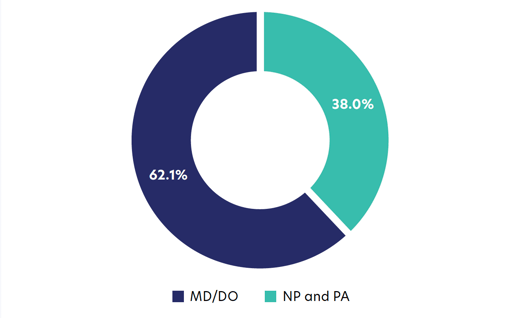
38%

of U.S. patients received NP/PA care in 2024

Why Existing Data & Media Approaches Fall Short

The Three Things Brands Need to Get Right

Standard HCP datasets, targeting tools, and media buys were built around physicians. Without a framework designed for NP/PA visibility, the gap compounds at every stage.

1

IDENTIFY

Know exactly who NPs and PAs are across your relevant categories — by specialty, geography, and prescribing behavior. Standard provider lists and claims data often miss them entirely due to billing attribution gaps and "incident-to" structures that mask their activity.
2

UNDERSTAND

Quantify their actual clinical footprint: patient volume, prescribing patterns, autonomy levels, and therapeutic priorities. Without AAPA-backed workforce data and claims-based analysis, teams are making targeting decisions on an incomplete picture of real-world influence.
3

ENGAGE

Build strategies calibrated to how NPs and PAs actually work, decide, and communicate. They have physician-level clinical expectations, high prescribing autonomy, and unique engagement preferences — generic HCP messaging consistently underperforms.

The structural problem: When NPs and PAs are invisible in your data, they're invisible in your strategy — and your competitors who can see them have a compounding advantage. This report is designed to close that gap.

1.
Scope Of Practice

Foundational Context & Scope Of Practice

NPs and PAs are highly trained, licensed clinicians who diagnose, treat, and manage a broad range of medical conditions across nearly every specialty and care setting.

More than five decades of research have demonstrated the safety, quality, and effectiveness of care delivered by these professionals across diverse clinical environments.

Since 1985, the Centers for Medicare & Medicaid Services (CMS), along with most commercial payers, have recognized NPs and PAs as eligible billing providers.

Certain billing structures create a structural visibility gap. When services are billed "incident-to" a supervising physician, the NP or PA who actually delivered care disappears from the data record — making their clinical and financial contribution systematically invisible to standard analytics, targeting tools, and brand measurement approaches. This is not an oversight; it is a measurement architecture problem.

In general, NPs and PAs are authorized to diagnose illness, order and interpret diagnostic tests, prescribe medications across drug classes, perform procedures, coordinate care, and deliver preventive services.

Differences across states often relate to supervisory language, collaboration requirements, and prescriptive authority.

NP and PA clinicians group photo
Policy meeting and legislation

Recent Policy Modernization

As of January 2026, more than half of U.S. jurisdictions have adopted full or conditional full-practice authority frameworks for NPs, allowing them to practice under state nursing boards rather than physician oversight.

Currently, NPs practice independently in 28 states, with DC and multiple U.S. territories also granting full or conditional practice authority.

For PAs, 19 states have now passed PA licensure compact legislation, far surpassing the required threshold to activate a national compact. Multiple states have enacted practice modernization reforms, shifting from rigid supervisory structures toward collaborative, competency-aligned frameworks.

These legislative shifts are designed to reduce outdated restrictions, improve access to care, and align statutory language with contemporary education and training standards.

Understanding this policy and scope landscape provides essential context for interpreting the workforce growth, prescribing patterns, and patient reach data presented in subsequent sections.

2.
Workforce Evolution

Workforce Evolution & Growth Trends

The NP and PA professions were established in the late 1960s to address physician shortages. Over the decades, both professions have evolved from limited "extender" roles into fully integrated components of care delivery.

Today, approximately 685,000 NPs and PAs are represented across the national workforce and claims datasets — including more than 461,000 Nurse Practitioners and more than 190,000 Physician Associates.

National Workforce Estimates (2024)

SourceNPs & PAsPhysicians
HRSA (Workforce Model)549,590979,740
POCN Group (Claims-based)>694,0001,270,537
BLS (Occupational Data)547,400839,000

Source: HRSA National Workforce Model (2024); BLS; POCN Group analysis of national claims.

Growth Projections Through 2037

Growth projections from both HRSA and BLS indicate sustained expansion through 2037.

BLS projects NP employment growth of ~40% and PA growth of ~28%, compared with physician growth of 3–4%. HRSA models show the combined NP/PA supply steadily narrowing the gap with physician supply over the next decade.

These projections occur against a backdrop of structural constraints in the physician workforce. The physician pipeline is limited by residency capacity and demographic retirement trends.

~40%Projected NP employment growth (BLS, 2024–2037)
~28%Projected PA employment growth (BLS, 2024–2037)

Specialty Mobility

One defining workforce characteristic of NPs and PAs is specialty mobility.

Survey data show that approximately 78% report working in more than two specialties during their careers.

This flexibility supports rapid workforce redeployment across care settings as patient needs evolve. The most commonly cited reasons for specialty transitions include work-life balance, interest in new clinical areas, improved compensation, and expanded professional opportunities.

Together, sustained growth, regulatory modernization, and specialty mobility position NPs and PAs as adaptive components of healthcare system capacity.

NP and PA clinicians consulting together

Their projected expansion suggests that future care delivery models will increasingly depend on advanced practice clinicians to meet patient demand.

3.
Clinical Footprint and Patient Reach

Clinical Footprint and Patient Reach

Beyond volume, NPs and PAs exert influence through where they practice and the specialties they serve. Claims-based analyses reveal a substantial share of the workforce in many strategically important and capacity-constrained areas of care.

In behavioral health, NPs and PAs account for nearly half of all clinicians. In psychiatry, metabolic disease, infectious disease, dermatology, general medicine, and endocrinology, they consistently represent 30–40% or more of providers.

Workforce analyses show that NPs and PAs are more likely than physicians to practice in high-need settings, including community-based environments and areas designated as Health Professional Shortage Areas (HPSAs).

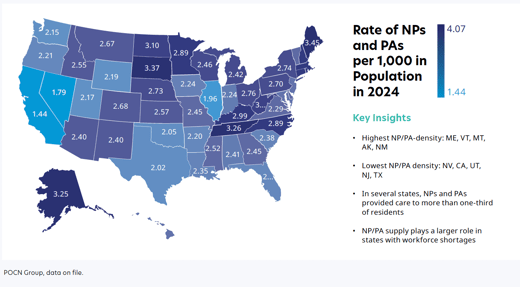
Geographic Distribution of NPs and PAs per 1,000 population, U.S., 2024

Geographic distribution of NPs and PAs per 1,000 population U.S. 2024

NP & PA Share by Specialty (2024)

SpecialtyNP & PA Share
Behavioral Health~47.8%
Psychiatry38.7%
Infectious Disease~40%
Metabolic Disease30–40%+
Dermatology30–40%+
Endocrinology30–40%+
General Medicine30–40%+

Share of U.S. patients receiving care from physicians versus NPs and PAs, 2024

Share of U.S. patients receiving care from physicians versus NPs and PAs 2024

POCN Group, data on file.

Patient Reach

38%of U.S. patients received care from an NP or PA in 2024

This is not limited to episodic or narrow clinical interactions; rather, it reflects ongoing participation in longitudinal care delivery across primary and specialty settings.

Claims-based analysis shows that NP and PA activity spans a broad range of high-demand clinical areas. These therapeutic concentrations align closely with areas experiencing workforce shortages and rising chronic disease burden.

In many settings, NPs and PAs serve as first-touch clinicians, diagnosing conditions, initiating treatment, and managing chronic disease over time.

Understanding this clinical footprint is essential to interpreting prescribing trends and system-level capacity. Their reach is both geographically distributed and therapeutically diverse, reinforcing their central role in modern care delivery.

4.
Prescribing Trends

Prescribing Trends & Medication Impact

Prescribing data provides one of the clearest quantitative indicators of NP and PA influence in U.S. healthcare.

This equates to prescriptions filled by more than 112 million patients.

Despite there being approximately 1.79 times as many physicians in practice, NPs and PAs collectively wrote nearly half as many prescriptions as physicians.

On average, NPs and PAs wrote 162 prescriptions per provider, compared with 146.3 per physician — reflecting slightly higher prescribing intensity relative to their workforce share.

35.8%of all active prescribers nationwide
33.9%of all filled prescription claims

Share of Prescribers and Total Rx by Clinician Type (2024)

Share of prescribers and total Rx by clinician type 2024

Source: POCN Group analysis of 2024 national pharmacy claims

Pharmacist and prescribing clinicians

Top Prescribed Medications

The most frequently prescribed medications in 2024 included atorvastatin, levothyroxine, amlodipine, albuterol, lisinopril, and semaglutide — treating cardiovascular disease, diabetes, respiratory conditions, and metabolic disorders.

NP and PA prescribing share for top medications ranged from ~25% to over 50%:

Amoxicillin: 50.9%  |  Bupropion: 44.8%
Trazodone: 42.3%  |  Sertraline: 41.8%
Prednisone: 41.4%

These patterns reflect their substantial presence in primary care, urgent care, and behavioral health settings.

As workforce growth continues, their prescribing contribution is projected to increasingly parallel that of physicians.

5.
Payer Mix & Claims Contribution

Payer Mix & Claims Contribution

Healthcare claims data analysis


Prescription Payer Distribution

NP and PA prescriptions are financed under commercial plans, Medicare Part D, Medicaid, and for dual-eligible populations. This broad distribution reflects the diversity of patient populations receiving pharmacologic treatment from advanced practice clinicians.

Within their assigned patient panels, NPs and PAs have a slightly higher share of Medicare- and Medicaid-covered patients than physicians. This pattern aligns with their concentration in primary care and underserved settings.

Prescription Payer Mix by Clinician Type (2024)

PayerNPs & PAsPhysicians
Commercial33.1%29.0%
Medicare26.5%25.4%
Medicaid11.0%8.3%
Other Government0.8%0.8%
Other0.7%1.0%

Source: POCN Group analysis of 2024 national pharmacy claims.

Claims data confirm that NPs and PAs are deeply embedded in serving publicly insured populations and play a measurable role in national claims activity across all insurance types.
As demographic shifts increase Medicare enrollment, the importance of advanced practice clinicians within these payer ecosystems is expected to grow.
6.
Survey Insights

Survey Insights: Autonomy & Engagement

POCN Group conducted a structured nationwide survey of 368 actively practicing NPs and PAs in 2024. The findings provide directional insight into specialty mobility, autonomy, and engagement behaviors.

A defining theme is clinical autonomy.

Nearly two-thirds (63%) of respondents reported full prescribing autonomy, with an additional 27% reporting 75–99% autonomy — meaning nearly 90% operate with high-to-full independent prescribing authority.

Survey respondents reflect significant professional experience: 86% have 10 or more years of clinical experience.

Specialty Mobility

Approximately 78% reported practicing in more than two specialties during their careers. Top reasons: work-life balance, new clinical areas, improved compensation.

POCN Survey of NPs and PAs

63%

of respondents reported full prescribing autonomy

27%

reporting 75–99% autonomy

POCN Survey: Pharmaceutical Visits & Sharing

Two-thirds (66%) of respondents reported that their practices allow visits from pharmaceutical representatives.

Among those practices that allow visits, 60% indicated that they actively share treatment information with colleagues, including physicians.

Therapy Selection Priorities

Efficacy & Safety
89%
Patient Clinical Profile
66%
Mechanism of Action
40%
Want Clinical Depth
83%

These priorities align with evidence-based decision-making frameworks and mirror those of physicians.

This positions NPs and PAs as information conduits within team-based care models.

NPs and PAs operate with substantial autonomy, adapt across specialties, and actively engage in clinical decision-making processes.

7.
Care Delivery

Leadership & a Structural Shift in Care Delivery

NPs and PAs are increasingly influencing healthcare beyond direct patient encounters.

10%of NPs hold formal leadership roles
2%of PAs hold formal leadership roles

These positions include care coordination, quality oversight, and operational decision-making across hospitals, specialty practices, and community-based settings.

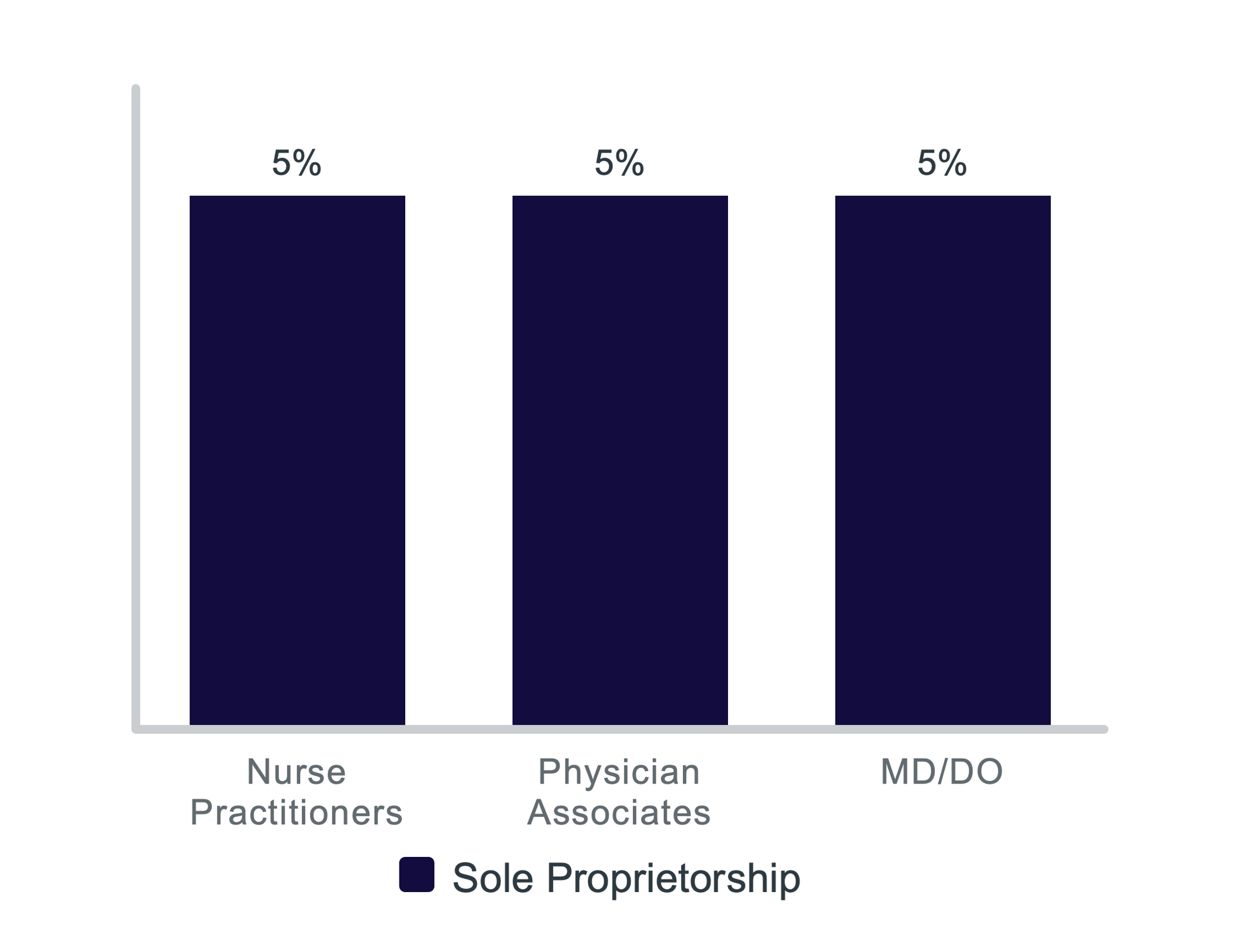
5%of NPs are sole proprietors or practice owners
5%of PAs are sole proprietors or practice owners

This mirrors physician ownership rates and reflects the diversification of practice models.

Clinician Sole Proprietorship by Provider Type in U.S.

Clinician sole proprietorship by provider type in the U.S.

Source: National Plan & Provider Enumeration System (NPPES), 2024; POCN Group analysis.

Survey data show that a majority of NPs and PAs who engage with pharmaceutical education share treatment information with colleagues. In many settings, particularly primary care and behavioral health, NPs and PAs serve as the most consistent point of clinical continuity — making them trusted internal references for therapy selection, switching decisions, and patient management approaches.

This dynamic creates a multiplier effect: a single, well-designed educational interaction can influence multiple downstream clinical decisions across a practice or care team.

Sophisticated Clinical Expectations

80%+want both broad disease-state education AND deeper, evidence-based clinical detail

Their top decision drivers — efficacy, safety, patient appropriateness, and mechanism of action — mirror those of physicians, reinforcing that engagement strategies must meet the same scientific and educational standards.

Simplistic or overly promotional messaging risks undermining credibility with a clinician audience that views itself as peer-equal within the care model.

Digital & On-Demand Channels

While a growing number of organizations limit access to traditional in-person representatives, NPs and PAs continue to seek education through digital, peer-led, and on-demand channels.

Many report receiving a significant portion of their continuing education on the job, favoring formats that integrate seamlessly into clinical workflows.

This reinforces the need for omnichannel strategies that prioritize relevance, flexibility, and clinical value over frequency alone.

For pharma organizations, recognizing NPs and PAs as both prescribers and amplifiers is critical to maximizing the return on educational investment.

8.
Conclusion

Conclusion: What Forward-Looking Teams Are Doing Differently

The data throughout this joint AAPA–POCN analysis point to a clear conclusion — and a clear imperative for pharma and agency teams:

Nurse Practitioners (NPs) and Physician Associates (PAs) are not peripheral participants in U.S. healthcare — they are foundational contributors to how care is delivered, how therapies are selected, and how patients access treatment.
~40%of the clinician workforce are NPs/PAs
>1/3of all U.S. prescriptions from NP/PA providers
38%of U.S. patients received NP/PA care in 2024
112M+patients received NP/PA prescriptions

These figures are not marginal; they reflect system-level integration. At the same time, workforce projections indicate continued growth in NP and PA supply, significantly outpacing physician growth rates.

Their clinical footprint spans primary care, behavioral health, endocrinology, dermatology, infectious disease, and numerous other specialties. They manage publicly insured and commercially insured populations alike. Survey data confirm high levels of autonomy and active engagement in therapeutic decision-making.

Taken together, these findings describe a structural shift, not a temporary trend. As healthcare delivery models continue to evolve, the influence of NPs and PAs is positioned to grow further.

Identify Map NP/PA presence across your priority specialties and geographies using claims-validated data
Understand Quantify their prescribing volume, autonomy, and patient reach — including what standard metrics currently miss
Engage Develop clinical messaging and channel strategies built for how NPs and PAs actually make decisions
Measure Attribute impact accurately — ensuring NP/PA-driven outcomes are visible in your ROI calculations

Ready to build a strategy that reflects the full reality of today's prescriber landscape? Download the full AAPA–POCN report or connect with our team to explore how these insights apply to your specific priorities.

Clinicians in a modern healthcare setting
The future state of U.S. healthcare will be shaped not by a single clinician type, but by an integrated workforce in which advanced practice clinicians play a central role.