
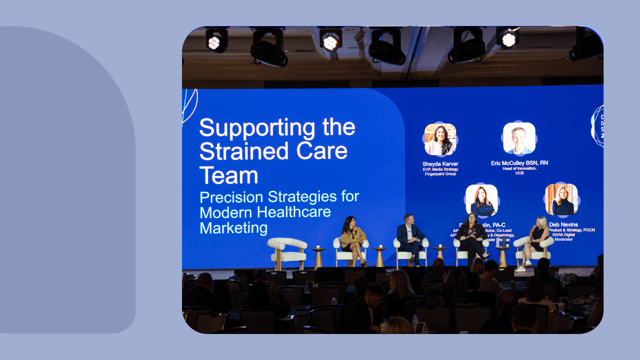
Supporting the Strained Care Team: Precision Strategies for Modern Healthcare Marketing
Healthcare delivery has changed and marketing needs to catch up. As nurse practitioners, physician associates, and broader care teams take on more responsibility across the patient journey, traditional physician-first engagement models are increasingly misaligned with how care is actually delivered today.
In this panel discussion, industry, agency, and clinical leaders explore how marketers can better support a strained care team by moving beyond reach and frequency toward more relevant, credible, and workflow-aware engagement. The conversation highlights why brands must better understand the role of NPs and PAs, build stronger value exchanges with clinicians, and design education that helps improve patient conversations not just brand exposure.
Key takeaways from the discussion:
-
The care team has expanded but marketing often hasn’t. NPs and PAs are increasingly central to diagnosis, treatment planning, patient education, adherence support, access coordination, and long-term follow-up. Marketing strategies that still focus narrowly on physician's risk missing the clinicians who are often closest to the patient experience.
-
Relevance matters more than reach. Clinicians are already managing time pressure, administrative burden, information overload, and competing demands. The panel challenges marketers to stop relying on blanket reach and instead use data, signals, and workflow context to deliver credible information at moments that actually matter.
-
Credible disease education can reduce burden for both patients and clinicians. When patients arrive better informed, care conversations can become more productive. The panel explores how thoughtful disease education, especially in complex or rare conditions, can support more confident discussions around diagnosis, treatment options, and long-term care.
-
Partnership requires more than inclusion on a target list. Including NPs and PAs in audience strategy is only the start. True partnership means understanding regional differences, scope of practice, team needs, and day-to-day workflow realities, then creating resources that help clinicians care for patients more effectively.
-
AI and omnichannel tools cannot fix a weak operating model. The panel makes clear that technology should support, not replace, human-centered strategy. Before scaling AI-enabled engagement, brands need to clarify who they serve, what value they provide, and how their tools help clinicians improve patient outcomes.
Featured speakers:
-
Sarah Enslin, PA-C, MS, APP Manager, Medicine; Co-Lead APP, Gastroenterology and Hepatology, University of Rochester Medical Center
-
Eric McCulley, BSN, RN, Head of Innovation, UCB
-
Sheyda Karvar, EVP, Media Strategy, fingerpaint Group
-
Deb Nevins, Director, Product Strategy, POCN, IQVIA Digital
.png?width=640&height=360&name=oct%201%20FACT%20SHEET%20TEMPLATE%20(1).png)